More great music from one of my favorites, legendary highlife musician Alex Konadu AKA "One Man Thousand," who passed away earlier this year. Beautiful singing, intricate guitar work, and deep Akan harmonies here on Mewu Ama Wo. You can read more about Konadu's life and music HERE at ModernGhana.com.
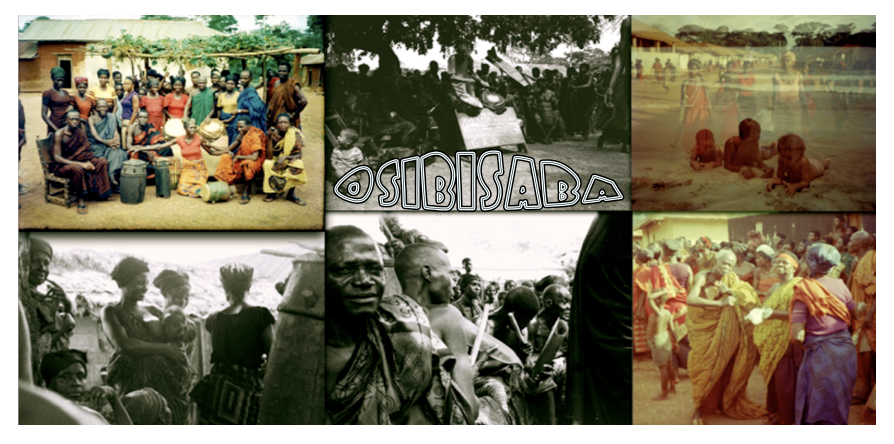
Top from left to right: Leader Nii Tei Ashitey with osrama drum, lead singer Maa Amanua, and Nii Adu "Big Boy" on gome drum.
Ga cultural highlife emerged during the 1970s as an urban, neo-traditional popular music form. The Gas are an ethnic minority in Ghana (where Akans dominate over forty percent of the population) yet they remain the majority in Ghana’s capital Accra, as they are the city’s oldest, original inhabitants. This ethnic group is primarily bound to the costal and the urban realms, as the sea (in particular fishing) has played a central role in livelihood up until the present. Ga musicians were involved in dance-band highlife since the early 20th century (this variety of highlife accordingly reflects influences from Ga traditional music), yet it was not until the cultural highlife of the 1970s that Gas put forth their own style of guitar-band music. This new music represented a desire to go “back to roots” and revive tradition.
Ga cultural highlife was largely the creation of drummer Nii Tei Ashitey, who founded the pioneering Ga highlife group Wulomei in 1973. Both a traditional and dance-band drummer, Ashitey founded Wulomei as a reactionary move against the influx of foreign music into Ghana. He states his objective as “To bring something out for the youth to progress and to forget foreign music and do their own thing” (Collis, Musicmakers 142). Inspired by the proto-highlife Ga konkoma groups of the 1940s, the music of Ashitey’s Wulomei encorporates influences from Ga traditional music, Kru sea shanties, work songs, and Akan guitar-band music. Wulomei’s original sparse lineup consisted of traditional percussion instruments (bells, rattles, drums), a single guitar, and a chorus of several male and female singers. Here, the percussion section is emphasized heavily, while singing is modeled after the group call and response singing of a traditional dance/drum ensemble both in terms of form and vocal technique. Accompanying the chorus of singers is the guitar, adding a highlife dimension to a style which might otherwise sound very much like traditional music.
Nii Adu (AKA "Big Boy") playing Gome
The term “Wulomei” itself refers to traditional Ga priests, and the band members of Wulomei self-consciously dress in the same white cloth/hats of Wulomei priests. In this way, the band’s name and dress are strategically used to represent deep roots in the Ga community and connections with traditional music/life. In the same manner, quintessentially Ga drums are used in cultural highlife as a means to signify ethnic ties and connections with tradition. The gome drum is a central instrument in the ensemble, a large bass frame drum which is sat upon while played. The musician is able to change the tone of the drum by moving his feet across the drum’s head. In addition, the osrama drum appears frequently in Ga cultural highlife. This skinny, high-pitched stick drum may by found in the courts of Ga kings (Mantse), where it is used as a “talking drum.”
Wulomei - Menye Menye
Walatu Walasa (1974) is Wulomei's second album, following Mibe Shi Dinn released earlier that same year. Released on Kwadwo Donkoh's Agoro records label, Walatu Walasa features many of Wulomei's biggest hits, including "Akrowa," "Kaafo," and the title track. John Collins writes: "Walatu Walasa means in Twi that 'you are digging and then shoveling it away,' implying that only an idiot would do both. Walatu Walasa has become a popular phrase at a time when large numbers of workers have been employed by the government to build drains in Accra. To greet a laborer with this term is to insult him, for it demeans manual labor" ("Ghanaian Highlife" p. 67). These Wulomei songs (and those of other Ga groups like Dzadzeloi, Suku Troupe, Ashiedu Keteke, Abladei, etc.) continue to be relevant and popular in Ghana today, where they may be heard playing over the radio and from street-side speakers in Accra. At the same time, Wulomei remains in existence with a lineup of all new members, now lead by Ashitey's daughter and son.
I really like this short essay by writer Nana Awere Damoah about the personal significance he found as a child in the highlife song "Time Changes" by Akwasi Ampofo Adjei and his Kumapim Royals Band. This song tells the story of a teacher giving a lesson to his students on the topic of life, its theme: "time changes."
Ghanaian song texts, whether popular or traditional, are often concerned with didactic, educational matters. Traditional/highlife songs may extol particular morals and values, while storytelling serves to impress various lessons upon listeners. In more recent times, traditional groups (such as Adowa/Nwomkro ensembles) have integrated songs into their repertoire which deal with such current topics as HIV/AIDS awareness and the dangers of reckless driving. In this same vein, hiplife (Ghana's ruling popular music) may be used as a platform for a variety of public service announcements, whether advertising politicians or raising awareness about any number of issues.
The four very catchy, sometimes amusing videos I've posted here represent hiplife/highlife PSAs broadcast over radio and television. These songs are rather unusual, and most are incredibly catchy. First (above) is a popular commercial from 2007, which explains in musical form the logistics of the currency change which occurred that same year. Unfortunately the artist is unknown. This is also one of the catchiest songs ever!
Keep the Money Clean - Akoo Nana & Castro
Second is "Keep the Money Clean" by hiplifers Akoo Nana and Castro. As demonstrated in the video, these artists urge Ghanaians to "keep our Cedi clean" by using wallets and avoiding crumpling bills.
Efinye - Lucky Mensah
Third, Lucky Mensah (a somewhat older highlife musician) appears in "Efinye" dressed as a sanitation worker, telling listeners to keep Ghana's cities clean.
Ntom Tom Be Wu (Aha Yede Remix) - Nana Boroo
Finally, we have a remix of Nana Boroo's popular song "Aha Yede." In "Ntom Tom Be Wu," Boroo discusses ways in which Ghanaians may avoid malaria. Highlights include a dance party in a giant mosquito net!
Here we have a short album by Kyeremateng Atwede and his Kyeremateng Stars entitled Owuo See Fie. "Owuo sei fie" is an Akan proverb which concerns the far reaching effects that a death may have on the family, roughly translated as "death spoils a house" or "death destroys a home." Accordingly, the "O" of the word Owuo (death) is filled in here with an ominous image of a skull. On this album, Kyeremateng Atwede and his group present three beautiful & deep Akan guitar-band style songs, with a counterbalance of two upbeat highlife tunes sung in Pidgin English ("Every Work Na Work" and "Yellow Woman").
Fidie Wura by Akwaboa's Band is a beautiful, laid-back gem of an album. The songs featured on this record are smooth and effortless, with rootsy harmonies, acoustic guitar playing, and singing characteristic of traditional Akan music and palm wine highlife. All of Akwaboa's recordings are excellent, but this album really wonderfully demonstrates the intimate relationships which exist between electric guitar-band highlife, palm wine, and traditional Akan music. And what a great album cover too!
Several posts back, I briefly mentioned a rendition of a traditional flute dirge played on the organ on a track from the African Brothers' album Tribute to D.K. In light of that comment I thought that I would take some time here to discuss the genre of funeral dirges for flute. Traditional flute music in Ghana is exceptionally beautiful, and dirges in particular are especially soulful and stirring. I've selected three videos from youtube which feature different performances of flute dirges. These performances occur in the context of funerals and mourning.
In the first two videos, dirges are played on the atenteben, a diatonic bamboo flute which was developed by composer/professor Dr. Ephraim Amu in the 1920/30s. The atenteben also appears in highlife music, from '70s bands Wulomei and Hedzoleh Soundz to modern groups like Hewale Sounds and the Pan-African Orchestra.
The third video features Nana Yaw Opoku Mensah, once a flautist in the court of the Asantehene, playing the traditional Akan odurugya flute. In contrast to the atenteben, the odurugya is a notched flute with a deep bass tone, built from the inner cane of the bamboo stalk. Like the Akan atumpan drums, flute dirges imitate the tonal contours of the Twi language. In this way, flute dirges may be conceived of as a musical recitation of a spoken text. Read more about the atenteben and odurugya in this short writing by Professor J.H. Kwabena Nketia HERE.
"The flute is often used in songs of lamenting or grief. This piece is more of a recitation than a song, for the odurugya is a 'talking' instrument, which means that the Akan of antiquity developed a system of encoding their language into the range of sounds/tones the odurugya makes. One must be immeresed in the 'deep structures' of Akan society in order to learn the method of 'decoding' the flute language."
In conclusion, I offer a short recording of an odurugya dirge from Ephraim Amu's University of Ghana Chorus record. Thank you to the individuals who posted these wonderful videos of traditional flute music from Ghana.
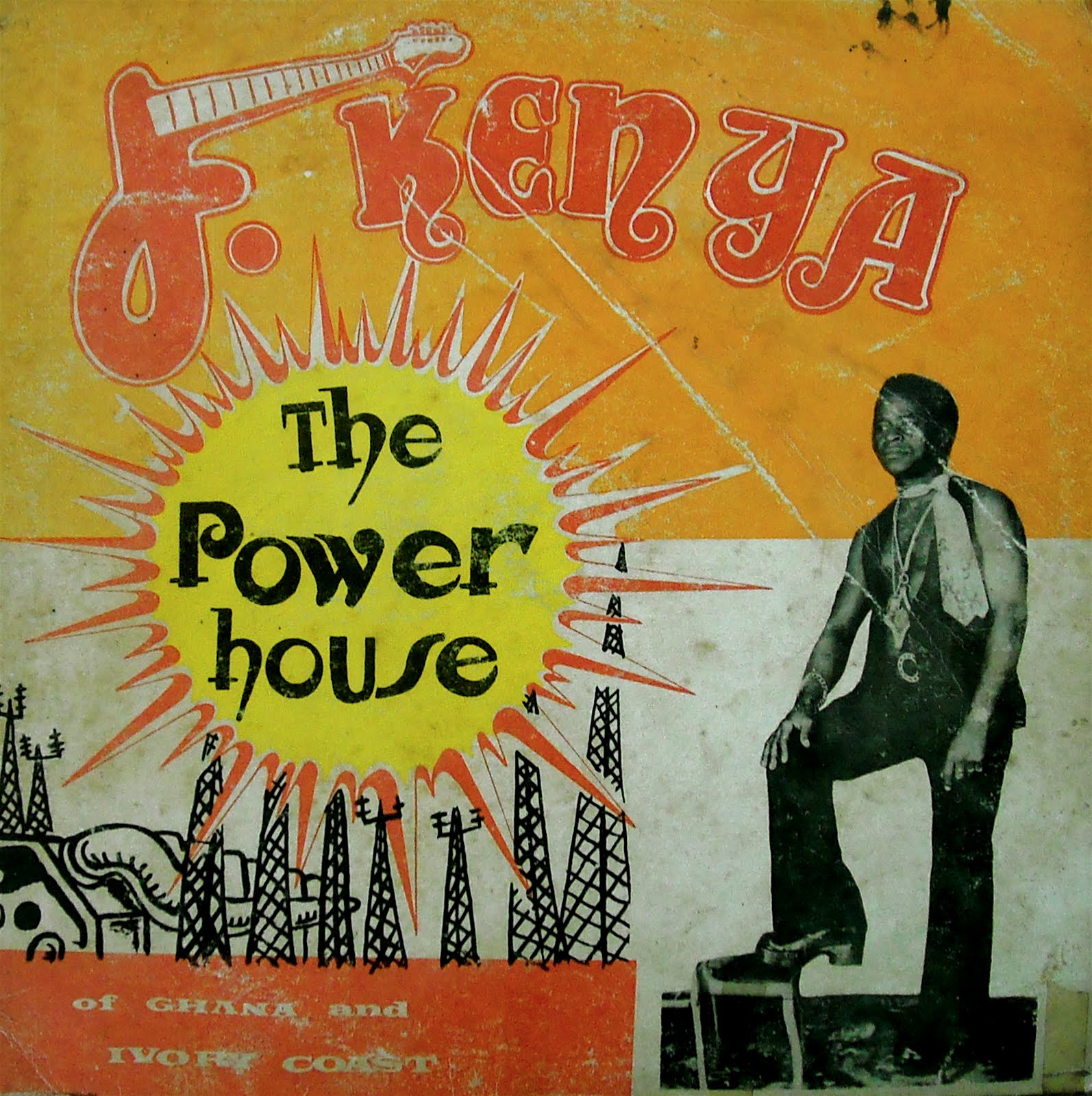
The music of F. Kenya is (in my humble opinion) some of the most stunning Ghanaian highlife ever recorded, music with a unique sound characterized by deep Akan harmonies, sweet organs, and heartbreakingly beautiful vocals. The Power House, released on Essiebons in 1975, is Francis Kenya's first full length record. Like Kenya's other work, these songs are beautifully arranged, with rich musical textures that feature an interplay between interlocking guitar parts and organ lines. In addition, these songs are unique in that they are sung in Nzema (Kenya's own language) rather than the dominant Asante Twi (generally the language of highlife). The Nzema are an Akan ethnic group found on both sides of the Southern Ghana/Côte d'Ivoire border. As in the context of other African countries, boundaries imposed by European colonizers frequently divided ethnically similar groups across arbitrary national borders.
F. Kenya - Mmamya Bie Mmamma
Below is a brief biography of F. Kenya from the back of this album:
Prof. John Collins of the University of Ghana, Legon shared a close relationship with F. Kenya, living in his home during the 1970s and travelling with Kenya's concert party troupe for some time. In addition, Collins recorded F. Kenya & his band at his Bokoor Studio. Seven of these tracks may be found on the great compilations The Guitar and the Gun and Electric Highlife.