 Giants of Danceband Highlife (1990)
 is another great, hard-to-find Original Music compilation. This one features tracks by three of the most famous and prolific Ghanaian dance bands, E.T. Mensah's
Tempos, the
Ramblers, and
Uhuru.
Download it
Here.
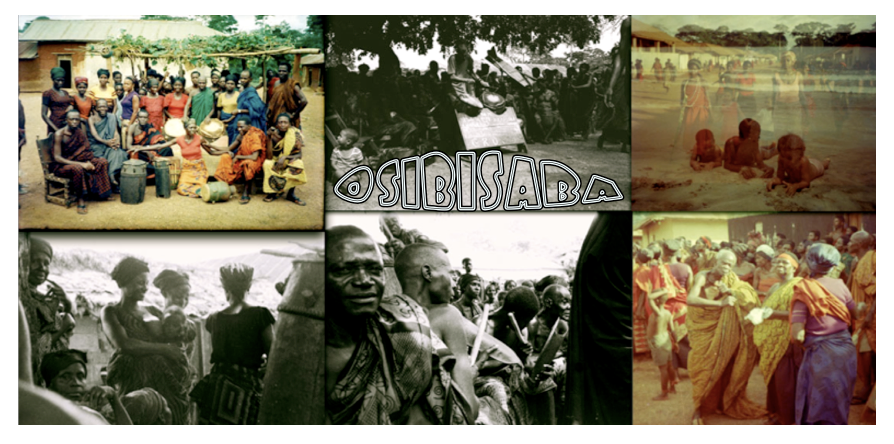
"The big dance bands flourished during the 1950s and 1960s in both Ghana and Nigeria. In Ghana, the leading bands played regularly in the major towns, now growing rapidly in population ... The large towns like Accra, Cape Coast, and Kumasi had prestigious ballroom orchestras which played waltzes, foxtrots, quicksteps, ragtimes, rumbas, and highlifes to a black elite audience in top hats and evening dress. The earliest of these was the Excelsior Orchestra formed in 1914. It was in this context of local melodies like the Osibisaba and Ashiko, being orchestrated for an upper class audience, that the term "highlife" was coined (Collins, Musicmakers of W. Africa).
Comprising a typical line-up of brass, vocals, percussion, drums, double bass and electric guitar, the bands could play a bewildering variety of styles reflecting popular demand although highlife itself remained the staple affair. The lyrics were also delivered in a variety of languages including Twi, Fante, Ga, Efik, Ibo, Ewe, and Hausa (as well as English and Spanish).
During the 1960s, many dance bands suffered at the hands of the state bands who, by offering a regular salary and stable employment, attracted many of the best musicians away from the private highlife bands. Many of the large state corporations, from the Cocoa Board and the Black Star line to the state hotels and the Builders Brigade, formed their own outfits. By the 1970s, hard on the heels of economic decline and an increase in the demand for imported music, highlife dance bands were steadily declining in number and popularity. The Tempos and the Uhurus staggered on but it was really only the Ramblers who survived as a viable musical unit (R. Graham, The Da Capo Guide)."
Note: Graham's description of Dance band stagnation seems somewhat inaccurate to me, as he fails to mention contrary trends such as the continuous popularity of King Bruce's dance bands, Uhuru's later successes (e.g. excursions into Afrobeat and fusion music with Oscar Sulley), and E.T. Mensah's '70s
revival.
 |
| E.T. Mensah |
 |
| Ramblers Dance Band |
 |
| Stan Plange & Uhuru |
 |
| Jerry Hansen of Ramblers |


 Giants of Danceband Highlife (1990) is another great, hard-to-find Original Music compilation. This one features tracks by three of the most famous and prolific Ghanaian dance bands, E.T. Mensah's Tempos, the Ramblers, and Uhuru.
 Also, I feel compelled to give brief mention of track eleven, Akompi's "Ose Obeko." This tune begins with a unique solo bass introduction that really strikes me each time I listen to it. Here, the bass (possibly an upright?) mimics the playing style of the Ashanti Atumpan drums (often referred to as "talking drums"). Played in pairs of two differently pitched drums, the Atumpan is used to express verbal phrases, proverbs, and appellations. The experienced player is able to translate these speech patterns (many of which are set phrases) onto the Atumpan based upon the different tones of the Twi language (it should be noted that the Ga and Ewe do use the Atumpan as well in relation to their own languages). I think this example of Atumpan drumming translated onto a bass is rather remarkable, so I've included the track here for your listening:


